


單例模式 Singleton Pattern
302 字
2 分鐘
單例模式 Singleton Pattern
目的
只有一個實例,而且自行實例化並向整個系統提供這個實例。
Ensure a class only has one instance, and provide a global point of access to it.
適用
當整個系統只需要、或必須只允許只有一個該類別物件存在時使用。
結構及成員
Collaborations: 該類別本身。
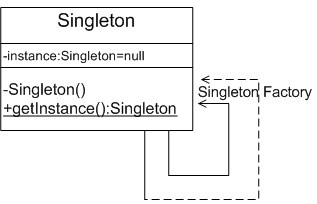
- Singleton:宣告外部存取該物件的介面。宣告私有的建構子,讓它不能被外界存取。
影響結果
好處
- 對唯一存在的實例化物件能夠受限制的存取。減少應用程式的命名空間。可以透過子類別擴展。實例化物件的數量可以改變。有靈活性的操作。
實作
方法
- 依情況,可以實作為積極單例(Eaget)、懶散單例(Lazy)、或懶散雙重鎖單例(Double Lazy)等等。
Example:
Eager Singleton
public class EagerSingleton { private static EagerSingleton instance = new EagerSingleton(); private EagerSingleton() {} public static EagerSingleton getInstance() { return instance; }}Lazy Singleton
public class LazySingleton { private static LazySingleton instance; private LazySingleton() {} public static LazySingleton getInstance() { if (instance == null) instance = new LazySingleton(); return instance; }}Lazy Double Singleton
public class LazyDoubleSingleton { private static LazyDoubleSingleton instance; private LazyDoubleSingleton() {} public static LazyDoubleSingleton getInstance() { if (instance == null) { synchronized(LazyDoubleSingleton.class) { if (instance == null) instance = new LazyDoubleSingleton(); } } return instance; }}文章分享
如果這篇文章對你有幫助,歡迎分享給更多人!
單例模式 Singleton Pattern
https://linziyou.info/posts/2020-11-10-單例模式-singleton-pattern/ 最後更新於 2020-11-10,距今已過 1958 天
部分內容可能已過時