


狀態模式 State Pattern
1213 字
6 分鐘
狀態模式 State Pattern
目的
讓物件的外顯行為隨內部狀態的改變而改變,彷彿連類別也變了似的。
適用
- 當物件的行為取決於它的狀態,連執行期行為也得隨狀態而改變時。如果某些操作裡面,依據物件狀態而做的條件判斷式太過龐大時。狀態通常會以enum表示,許多操作裡面也常會有相同的條件判斷結構。State Pattern將每一個條件分支抽取成獨立的類別,以便將物件狀態也視為另一個獨立的物件,可獨立改變。
結構及成員
Collaborations:
Context將與狀態有關的訊息委託給目前持有的ConcreteState去處理。
Context可能把自己當作傳參傳給State。
Context是主要的對外窗口。Client可用State物件來設定Context的組態,設好之後便不再直接插手State物件。
可令Context或ConcreteState的子類別決定在什麼情況下該切換成什麼狀態。
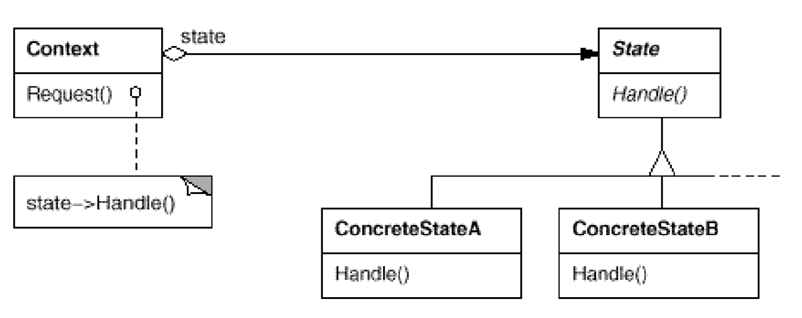
- Context: like the CruiseControl, TCPConnection制定外界感興趣的介面。持有一個ConcreteState。State:此介面負責封裝當Context處於特定狀態時所該展現的行為。ConcreteState: like the CruisingCanceled, TCPEstablished, TCPClosed, TCPListen, etc.每一個子類別都針對某一種Context狀態實作出該展現的行為。
影響結果
好處
- 集中處理與狀態相依的行為並予以切割。只要定義新的State子類別,即可輕易增加新的狀態及狀態轉移邏輯。替每一種狀態設一個State物件,能突顯狀態轉移邏輯,也能避免Context不一致的內部狀態。(以Context來看,狀態轉移是個不可再細分的atomic動作)狀態物件可共用。若State物件不含實例變數,則Context可以共用State物件,此時State物件相當於沒有內在狀態、只有行為的Flyweight物件。
壞處
- 需要額外新增類別。
實作
誰來定義狀態轉移邏輯?
- 若條件是固定的,可以全寫在Context裡;而彈性更好的做法,是讓State的子類別決定自己的下一個State是誰、何時才做轉移。Context需增加一個讓State物件可以設定Context的State的方法。只要定義新的State子類別,就能修改或擴充狀態轉移邏輯。但缺點是State子類別需要知道至少一個其他的State子類別,增加子類別之間的實作相依性。
State物件的生與死?
- 取捨:有需要時才產生State物件,用完即砍。事先件立好,事後絕不殺掉。若在Run-time時不知道處於哪些狀態,且Context不常改變狀態時,第一種做法較好。若State物件含有大量資訊,且狀態常常改變,就會想避免一再刪除State物件,就該用第二種做法。
使用動態繼承
若能在Run-time動態改變物件所隸屬的類別,就能針對特定訊息改變自身行為。
Example: Cruise Control System
public abstract class State { State[] states;
abstract void leverDown(CruiseControl c); abstract void leverUpAndHold(CruiseControl c); abstract void leverDownAndHold(CruiseControl c); abstract void leverReleased(CruiseControl c); abstract void leverPulled(CruiseControl c); abstract void brakeApplied(CruiseControl c); abstract void leverUp(CruiseControl c); abstract void onOffButtonPressed(CruiseControl c);
void setDesiredSpeed(CruiseControl c) { System.out.println("setDesiredSpeed"); }}public class CruiseDeactivated extends State { @Override void onOffButtonPressed(CruiseControl c) { // TODO Auto-generated method stub System.out.println("CruiseDeactivated change to CruiseActivated"); System.out.println("CruiseDeactivated change to CruisingCancelled"); c.setState(new CruisingCancelled()); } @Override void leverDown(CruiseControl c) {} @Override void leverUp(CruiseControl c) {} @Override void brakeApplied(CruiseControl c) {} @Override void leverDownAndHold(CruiseControl c) {} @Override void leverUpAndHold(CruiseControl c) {} @Override void leverPulled(CruiseControl c) {} @Override void leverReleased(CruiseControl c) {} @Override void setDesiredSpeed(CruiseControl c) {}}public class CruiseActivated extends State {
@Override void onOffButtonPressed(CruiseControl c) { // TODO Auto-generated method stub System.out.println("CruiseActivated change to CruiseDeactivated"); c.setState(new CruiseDeactivated()); } @Override void leverDown(CruiseControl c) {} @Override void leverUp(CruiseControl c) {} @Override void brakeApplied(CruiseControl c) {} @Override void leverDownAndHold(CruiseControl c) {} @Override void leverUpAndHold(CruiseControl c) {} @Override void leverPulled(CruiseControl c) {} @Override void leverReleased(CruiseControl c) {}}public class Cruising extends CruiseActivated { @Override void leverDown(CruiseControl c) { System.out.println("Cruising change to Cruising"); setDesiredSpeed(c); c.setState(new Cruising()); } @Override void brakeApplied(CruiseControl c) { System.out.println("Cruising change to CruisingCancelled"); c.setState(new CruisingCancelled()); } @Override void leverDownAndHold(CruiseControl c) { System.out.println("Cruising change to DecreasingSpeed"); c.setState(new DecreasingSpeed()); }
@Override void leverUpAndHold(CruiseControl c) { System.out.println("Cruising change to IncreasingSpeed"); c.setState(new IncreasingSpeed()); }
@Override void leverPulled(CruiseControl c) { System.out.println("Cruising change to CruisingCancelled"); c.setState(new CruisingCancelled()); }}public class CruisingCancelled extends CruiseActivated { @Override void leverDown(CruiseControl c) { System.out.println("CruisingCancelled change to Cruising"); setDesiredSpeed(c); c.setState(new Cruising()); } @Override void leverUp(CruiseControl c) { System.out.println("CruisingCancelled change to Cruising"); c.setState(new Cruising()); } @Override void leverDownAndHold(CruiseControl c) { System.out.println("CruisingCancelled change to DecreasingSpeed"); c.setState(new DecreasingSpeed()); } @Override void leverUpAndHold(CruiseControl c) { System.out.println("CruisingCancelled change to IncreasingSpeed"); c.setState(new IncreasingSpeed()); }}public class DecreasingSpeed extends CruiseActivated{ @Override void leverReleased(CruiseControl c){ System.out.println("DecreasingSpeed change to Cruising"); setDesiredSpeed(c); c.setState(new Cruising()); }}
public class IncreasingSpeed extends CruiseActivated{ void leverReleased(CruiseControl c){ System.out.println("IncreasingSpeed change to Cruising"); c.setState(new Cruising()); }}public class CruiseControl { State state; public CruiseControl() { // TODO Auto-generated constructor stub this.state = new CruiseDeactivated(); } public State getState() { return state; } public void setState(State state) { this.state = state; } void onOffButtonPressed() { state.onOffButtonPressed(this); } void leverDown() { state.leverDown(this); } void leverUp() { state.leverUp(this); } void brakeApplied() { state.brakeApplied(this); } void leverDownAndHold() { state.leverDownAndHold(this); } void leverUpAndHold() { state.leverUpAndHold(this); } void leverPulled() { state.leverPulled(this); } void leverReleased() { state.leverReleased(this); }}public class Main {
public static void main(String[] args) { // TODO Auto-generated method stub CruiseControl cruiseControl = new CruiseControl(); cruiseControl.onOffButtonPressed(); cruiseControl.leverDown(); cruiseControl.onOffButtonPressed(); }
}Result:
CruiseDeactivated change to CruiseActivatedCruiseDeactivated change to CruisingCancelledCruisingCancelled change to CruisingsetDesiredSpeedCruiseActivated change to CruiseDeactivated文章分享
如果這篇文章對你有幫助,歡迎分享給更多人!
狀態模式 State Pattern
https://linziyou.info/posts/2020-10-27-狀態模式-state-pattern/ 最後更新於 2020-10-27,距今已過 1972 天
部分內容可能已過時